
Plymouth County Clerk Structure
The Massachusetts Trial Court has seven departments, and each one runs its own clerks. The most relevant offices in Plymouth County are the Clerk of Courts for Superior Court, the Clerk-Magistrates for the District Court locations, the Register of Probate for the Probate and Family Court, and department clerks for the Housing, Juvenile, and Land Court matters that reach Plymouth County.
This split is why a single phone call rarely solves a clerk problem. The case department points to the right office. The case city points to the right building. Treat the department and the city as two separate questions and the rest follows.
Superior Court Clerk's Office
The Plymouth County Superior Court has its own Clerk of Courts, who keeps the civil and criminal files for serious cases. Felony indictments, large civil judgments, and Superior Court docket sheets live with that clerk. The Superior Court department page is shown below.
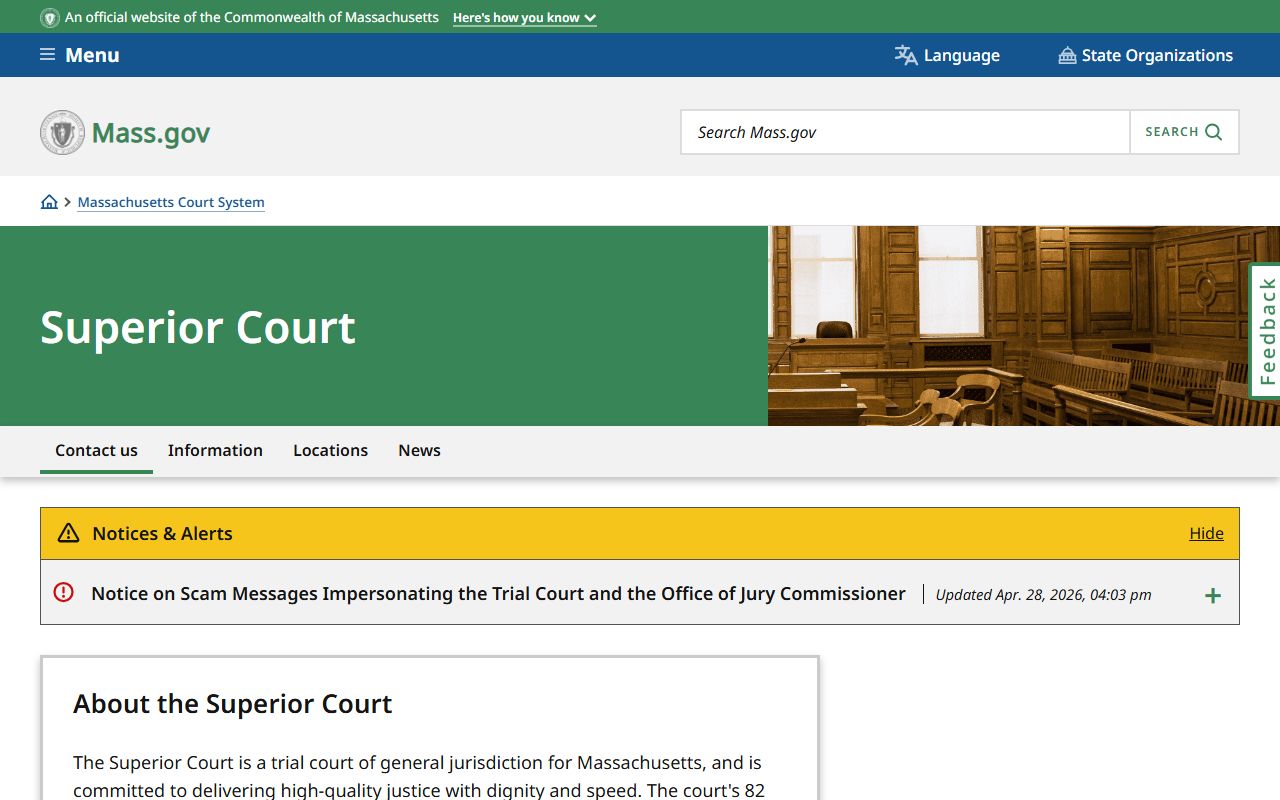
The official Superior Court page lists jurisdiction and resources, while the Plymouth location page lists the address and hours.
Plymouth County Superior Court
52 Obery Street
Plymouth, MA 02360
See mass.gov location page
Confirm hours before visiting
District Court Clerk-Magistrates
The District Court uses clerk-magistrates rather than a single county clerk. Each District Court location has its own office. Plymouth County has four District Court sites: Brockton, Hingham, Plymouth, and Wareham. The right clerk depends on the city named on your case papers.
- Brockton District Court at 215 Main Street.
- Hingham District Court at 28 George Washington Boulevard.
- Plymouth District Court at 52 Obery Street.
- Wareham District Court at 2200 Cranberry Highway in West Wareham.
Misdemeanor cases, small claims, civil motor vehicle, and abuse prevention orders typically go through these clerks. Each office may have its own preferred form for a copy request, so the location page is the best place to confirm format.
Register of Probate
The Probate and Family Court has a Register of Probate rather than a clerk-magistrate. The register keeps estate, will, guardianship, conservatorship, divorce, and custody files. For the office details, see the Register of Probate page, which covers Plymouth and Brockton.
Sending a probate or family request to a District Court clerk is a common mistake. The register is the right office for those cases.
The Probate and Family Court has two Plymouth County locations, Plymouth and Brockton, and each has its own register staff. The case papers name the location. If you have only an old file with no location stamp, ask either register to help route the request rather than guessing.
Clerks for Housing, Juvenile, and Land Court
Three other departments matter for Plymouth County. The Southeast Housing Court uses its own clerk for sessions in Plymouth and Brockton. The Juvenile Court has its own clerk and access is restricted by law. The Land Court sits in Boston for the state but handles registered-land and title cases affecting Plymouth County.
Sending the request to the right department clerk often matters more than which courthouse you visit first. The case stamp on your papers is usually the cleanest hint.
Clerk vs Register: What the Words Mean
The titles are not interchangeable. A Clerk of Courts works in the Superior Court. A clerk-magistrate works in the District Court and can hold show-cause hearings. A register works in the Probate and Family Court. Each office handles its own filings, its own fees, and its own copies.
The titles also signal what the person can sign and certify. A Plymouth County request that goes to the right titled officer moves faster, and avoids a return-to-sender trip.
Mail, Email, and In-Person Requests
Clerks accept requests in more than one way. In person is fastest if you live near the courthouse and the case is simple. Mail works well when you have the docket number and a return-address envelope. Email can be the right route for smaller offices, but check the official page to see if it is accepted.
Whichever method you use, keep a copy of the request and the fee receipt. A clear file on your side saves time if you need to follow up.
How to Request a Certified Copy
A certified copy is the official version that other courts and agencies accept. Plain copies are fine for reading but are not certified. The Trial Court's request court records guide explains the process.
- Identify the court department and location that holds the case.
- Find the docket number through MassCourts if you do not have it.
- Write the request with case name, docket number, document needed, and copy type.
- Send by mail, email, or in person, depending on what the clerk accepts.
- Pay the fee in the form the office allows.
- Receive the certified copy and check it for accuracy before relying on it.
Records Request Fields
A complete request saves a follow-up letter. The fields below cover what most Plymouth County clerks need to find a file.
| Field | Required | Notes / Format |
|---|---|---|
| Court department | Yes | Superior, District, Probate and Family, Housing, Juvenile, or Land. |
| Court location | Yes | Plymouth, Brockton, Hingham, or Wareham, as applicable. |
| Docket number | Strongly recommended | Use the MassCourts docket format when known. |
| Case name and parties | Yes if docket unknown | Plaintiff and defendant, or petitioner and respondent. |
| Document requested | Yes | Docket sheet, complaint, judgment, decree, or transcript. |
| Copy type | Yes if certified | Plain, certified, attested, exemplified. |
| Requester contact | Yes | Name, mailing address, phone, email. |
Fees at the Plymouth County Clerk's Office
Fees depend on the department, the copy type, and any certification. The Trial Court and the local clerk set the rate. Confirm the current amount before mailing a request, since fees change. Vital records and CORI use separate fee schedules.
| Item | Amount |
|---|---|
| Plain copy of a public court document | Set by the clerk; confirm with the court |
| Certified or attested copy | Set by the department; confirm with the clerk |
| Search fee for an older record | May apply; confirm with the clerk |
| Filing fee | Set by the court for the case type |
| Fee waiver | By affidavit of indigency |
Contacting the Right Office
If you call the wrong clerk, the answer is usually a polite redirect. To skip that, match the case to the department before calling. The case papers, the docket entry, or the MassCourts record should name the court and the city. Use the mass.gov location page for that court to find the right number and hours.
Note: Clerk staff can confirm public docket entries and copy procedures, but cannot give legal advice or predict how a judge will rule.
For related court-record paths, see court records, court dockets, and Register of Probate.