
Southeast Housing Court Overview
Massachusetts has six regional Housing Court divisions. The Southeast Housing Court covers Plymouth County and neighboring areas. Its judges and clerks specialize in landlord and tenant law, code enforcement, and housing conditions. The official Housing Court department page describes the division statewide.
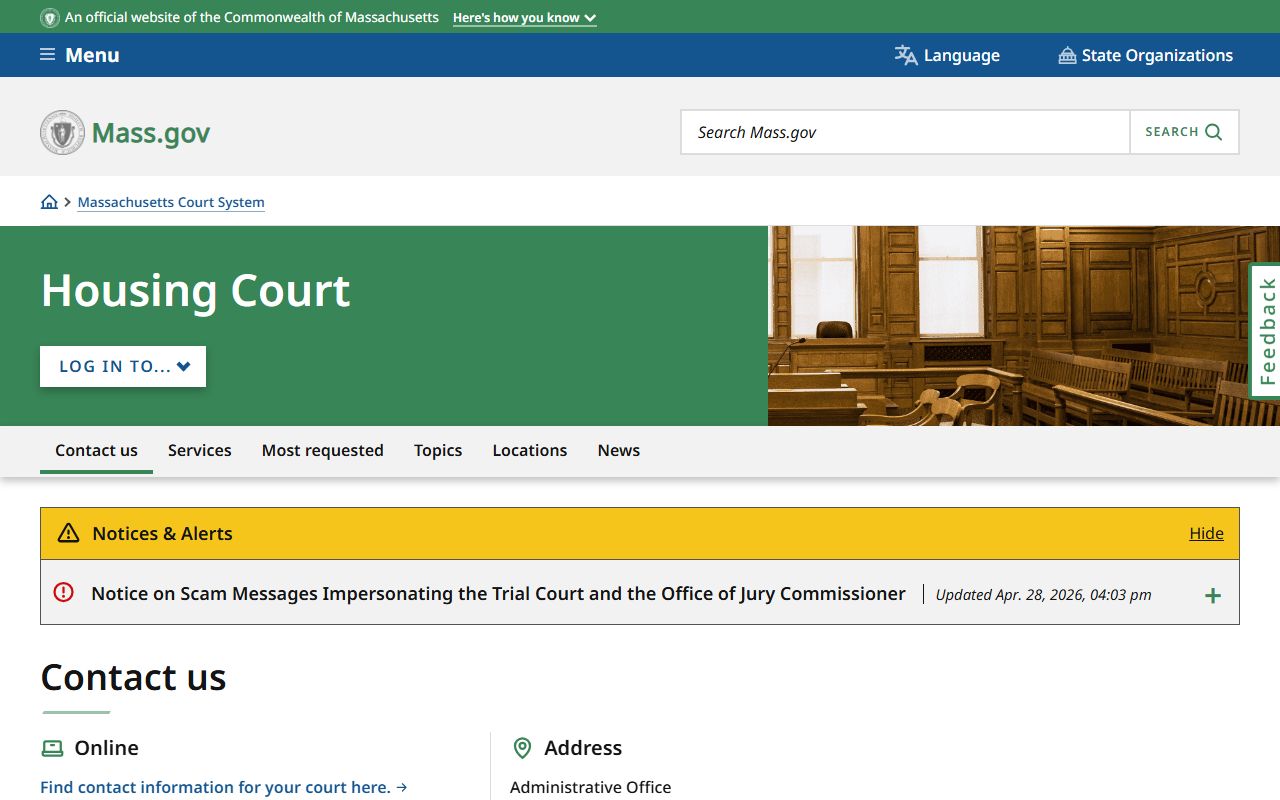
The Housing Court department's specialized focus is why a complex housing case often ends up there rather than in the District Court.
Where Plymouth County Housing Court Meets
The Southeast Housing Court runs sessions in Plymouth County at two locations. The Plymouth session and the Brockton session serve the county. The case papers and the docket entry name the session.
The Plymouth session page is shown below.
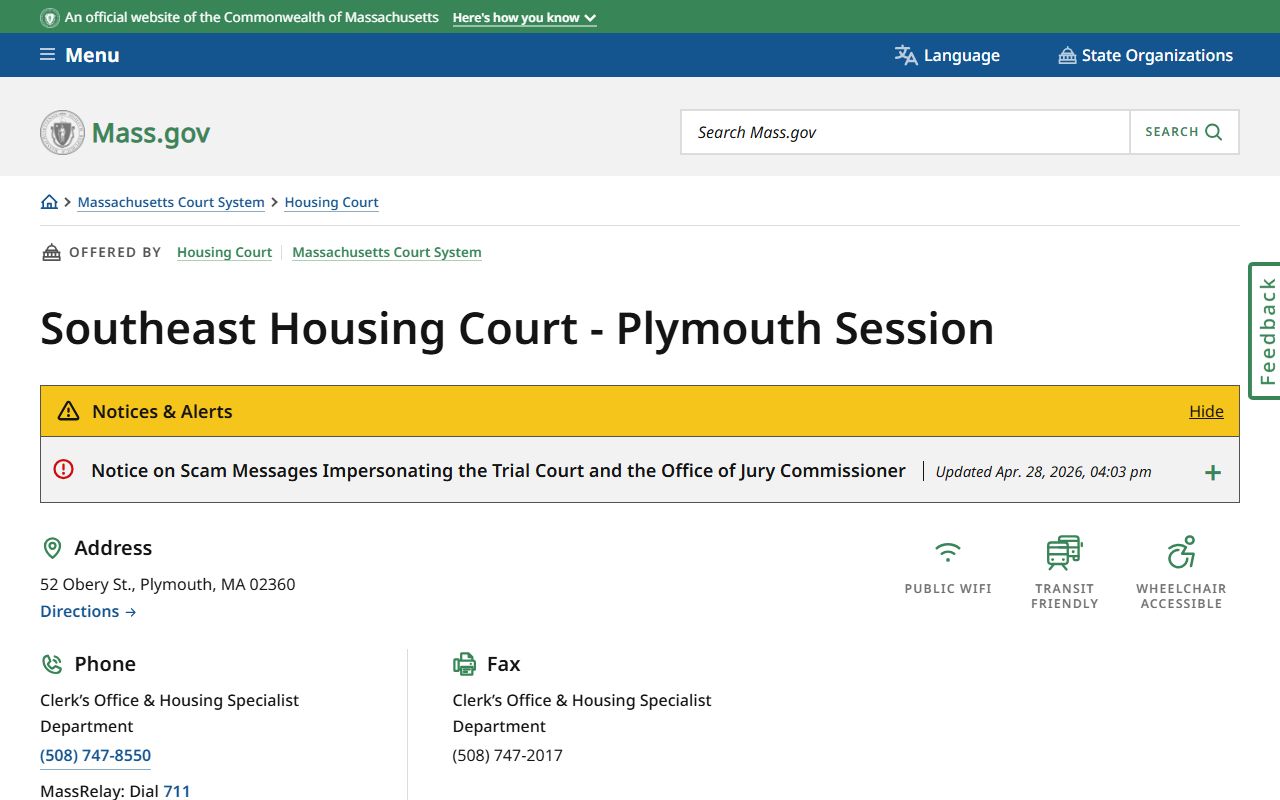
Confirm the schedule and the entrance on the mass.gov page before any visit, since session dates can shift.
What the Housing Court Hears
The Housing Court has wide authority over housing disputes. Cases include summary process for eviction, rent escrow, code enforcement, housing conditions, lead paint, receivership, discrimination claims, and related civil matters.
- Summary process for eviction, both nonpayment and no-fault.
- Code enforcement actions by towns or tenants.
- Housing condition claims and rent withholding.
- Lead paint and sanitary code matters.
- Receivership for distressed properties.
Some Plymouth County housing matters can also be heard in the District Court, but the Housing Court's specialized rules and staff often suit complex cases better. A party can sometimes ask to transfer a case from District Court to Housing Court when it qualifies.
Summary Process and Plymouth County Evictions
Summary process is the Massachusetts name for an eviction action. A landlord serves a notice, files a complaint, and the case moves on a strict schedule. Tenants have rights to raise defenses and counterclaims, including conditions, retaliation, and discrimination. The court can enter judgment, issue an execution for possession, or set a payment plan in some cases.
The schedule is tight. Missing a date in summary process can cost a tenant a chance to defend, or cost a landlord time on a clear case. Counsel and legal aid both matter here.
Searching Plymouth County Housing Court Records
Public housing dockets show on MassCourts when the department is selected. Search by docket number, by party name, or by address-related party where the system allows.
- Open MassCourts and choose Housing Court.
- Select the Southeast division if asked.
- Search by docket number or party name.
- Open the case to read the entries.
- Contact the session clerk for copies or restricted items.
For the broader docket walkthrough across departments, see court dockets.
Housing Court Docket Fields
A housing docket looks much like other Plymouth County dockets. The fields below capture the main parts of a summary process or housing case file.
| Field | What It Shows |
|---|---|
| Docket number | The case number for any clerk inquiry. |
| Parties | Landlord and tenant, or town and owner. |
| Case type | Summary process, code enforcement, small claim, civil. |
| Status | Open, dismissed, judgment, settled, or stayed. |
| Docket entries | Complaint, answer, motion, hearing, judgment, execution. |
| Restricted items | Financial detail and personal data may be impounded. |
Filing a Housing Case in Plymouth County
Filing depends on the case type. A landlord files a summary process action with the proper notice and complaint forms. A tenant may file a counterclaim, a code enforcement complaint, or a separate civil action. The session clerk routes filings to the right judge.
People without counsel should still seek help. Eviction cases move quickly and small mistakes carry real cost. Legal aid and pro bono programs handle many Plymouth County housing cases.
The session clerk can explain procedure and forms, but not strategy. For strategy, talk to counsel or a legal aid intake worker before the first hearing.
Housing Specialists and Mediation
The Housing Court uses housing specialists who can help parties talk before a judge rules. Many Plymouth County housing cases settle through this kind of guided conversation, with payment plans, repair orders, or move-out dates that work for both sides.
Settlement is not a defeat. A clear agreement, written up and entered on the docket, often beats a contested ruling for both landlord and tenant. Specialists do not give legal advice, but they help find common ground.
Tenant and Landlord Resources
The Trial Court, legal aid programs, and state agencies all offer help. Useful starting points include the Massachusetts Legal Resource Finder, the Committee for Public Counsel Services in eligible cases, and local housing organizations. The Brockton session page is shown below.
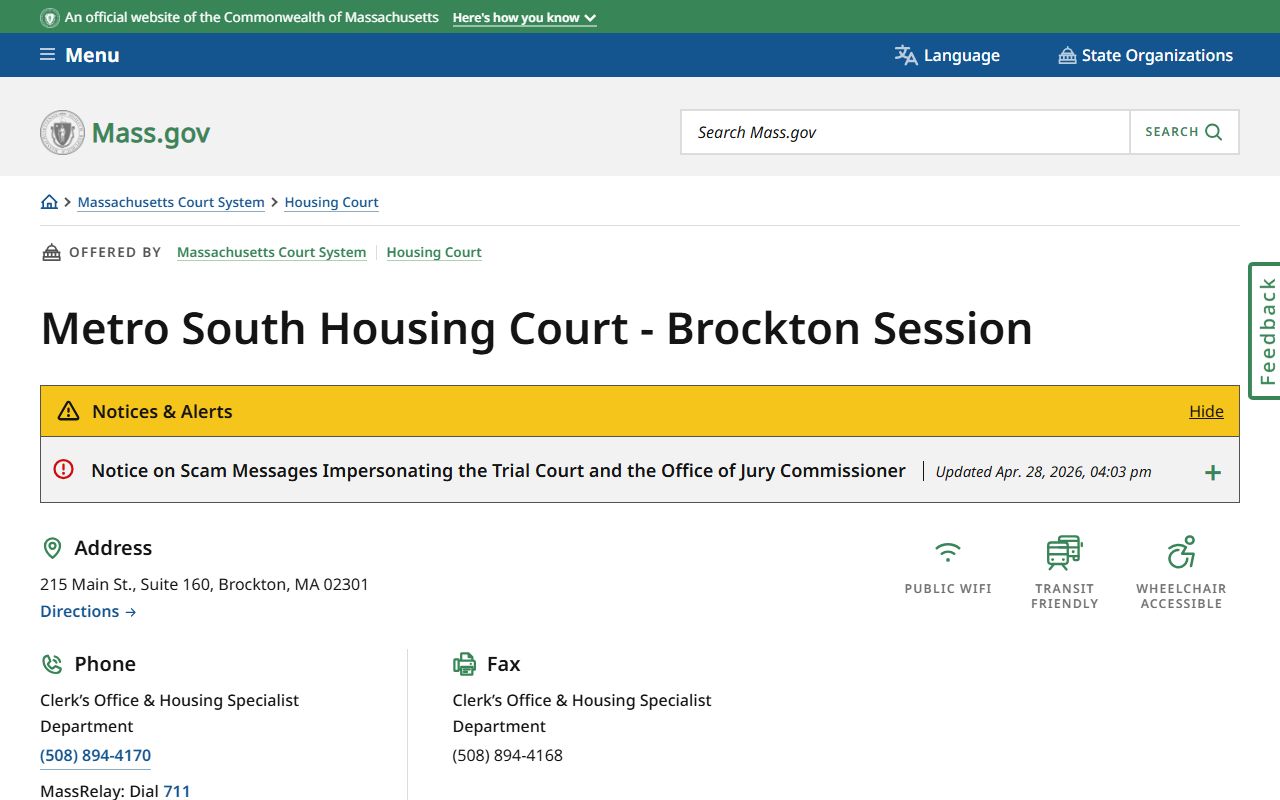
Tenants and landlords can both ask the session for resource lists at the courthouse. Many lists include local nonprofits, town housing offices, and intake lines for legal aid that screen by income and case type.
Code Enforcement and Receivership
The Housing Court has special authority to address sanitary and building code violations. Towns, tenants, and the Attorney General can bring code cases. In serious cases, the court can appoint a receiver to manage and repair a property under court oversight.
These cases produce orders that bind owners, and noncompliance can lead to further sanctions. Code enforcement matters often run alongside summary process when a property has serious conditions.
For tenants, code complaints can be filed with the local board of health as a first step before a court case. The Housing Court can then take the matter up if the local response is slow or limited.
Appeals from Plymouth County Housing Court
Decisions of the Housing Court can be appealed to the Massachusetts Appeals Court under court rules. Summary process appeals have their own timing and bond rules that can affect whether a tenant stays in the unit while the appeal is pending.
If you plan an appeal, talk to counsel quickly. The window to file is short, and missing the deadline ends the case. Keep copies of every filed paper and every order in the session record. Counsel can also weigh whether an appeal makes practical sense given the facts of the housing case.
Restricted Housing Court Materials
Most housing dockets are public, but some materials are restricted. Financial information, certain personal data, and items the court has impounded do not appear in public view. For broader public access rules, see public records.
Note: An eviction filing alone is not a judgment; many cases settle, dismiss, or end without an execution for possession.