
How to File a Plymouth County Public Records Request
The Massachusetts Public Records Law sits at M.G.L. c.66, §10. The Secretary of the Commonwealth oversees the system through the Supervisor of Records. The official agency page is shown below.
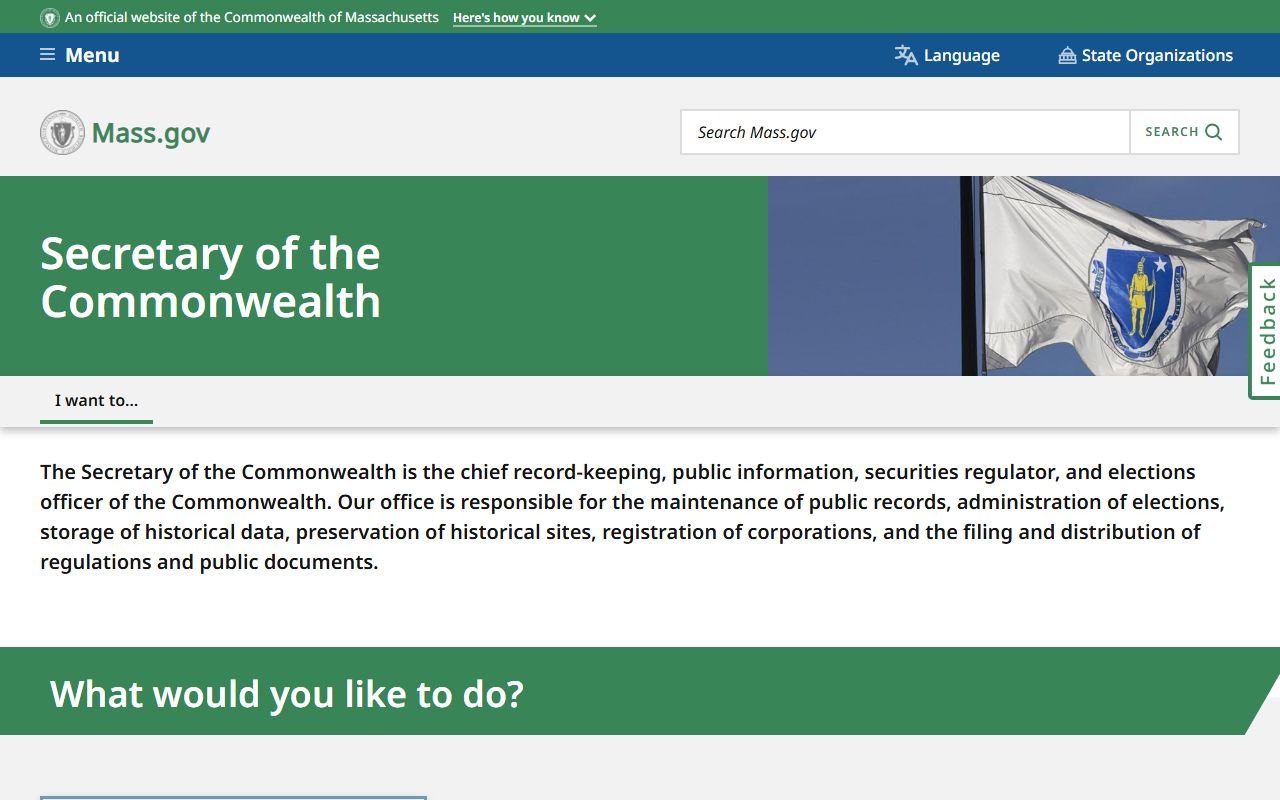
Visit the official Secretary of the Commonwealth page for forms and appeal guidance.
- Identify the agency or town that holds the record.
- Find the records access officer named on that body's website.
- Write a clear request that describes the records you want.
- Submit by email, mail, or any method the office accepts.
- Wait for the response and any fee estimate.
- Appeal to the Supervisor of Records if the response is wrong or late.
A clear and narrow request is faster to fill than a broad one.
Public Records Law vs Court Records
This is the most common mistake. The Public Records Law applies to executive agencies and towns. It does not control the courts. Court records follow constitutional access rules, Trial Court rules, and court orders. A request to the Plymouth County Treasurer is a Public Records Law request. A request to the Clerk of Court for a docket copy is a court-record request, handled under court rules.
If you send the wrong type of request to the wrong office, you will get a polite redirect at best. For court files, see court records and the Clerk of Court page.
Records Access Officers
Every agency and town names a records access officer. That person manages incoming requests, tracks deadlines, and explains any redactions. Many offices publish their officer's name, email, and address on their website.
Send your Plymouth County public records request to that officer rather than to a general inbox. Direct routing speeds the answer and creates a clearer paper trail.
What Records Are Available
The scope of public records is wide. Most agency documents are presumed public unless an exemption applies. Examples include town meeting minutes, contracts, salary information, budget documents, police logs, agency reports, and emails about public business. Some categories are restricted under statute, and personal data is redacted as needed.
- Town and city government records.
- State agency reports and correspondence.
- Police and fire incident logs.
- Contracts, budgets, and salaries.
- Permits and inspection records.
For criminal-history information, the path is different again. CORI runs through the Department of Criminal Justice Information Services, not the Public Records Law.
Response Timelines for Plymouth County Public Records
The law sets timelines for response. An agency must respond within a set number of business days, often by producing the records, by giving a fee estimate, or by stating an exemption. Extensions are available in some cases, but the office must explain why.
Keep dates clean. The clock starts on the day the office receives the request, so a clear email or a stamped letter helps. If a deadline passes without a real answer, that is grounds to appeal.
Plymouth County Public Records Request Fields
A good request gives the agency enough detail to find the records and to estimate any cost. The fields below cover what a useful request includes.
| Field | Required | Notes / Format |
|---|---|---|
| Requester name and contact | Yes | Email and address for the response. |
| Agency or town | Yes | Name the office that holds the record. |
| Description of records | Yes | What documents, what date range, what subject. |
| Format preference | No | Electronic or paper, where the office can provide. |
| Fee waiver request | No | State the public interest if you ask for a waiver. |
| Date of request | Yes | Used to track response deadlines. |
Exemptions Under the Public Records Law
The law defines what counts as a public record and lists exemptions. The definition and exemptions sit at M.G.L. c.4, §7, cl.26, shown below.
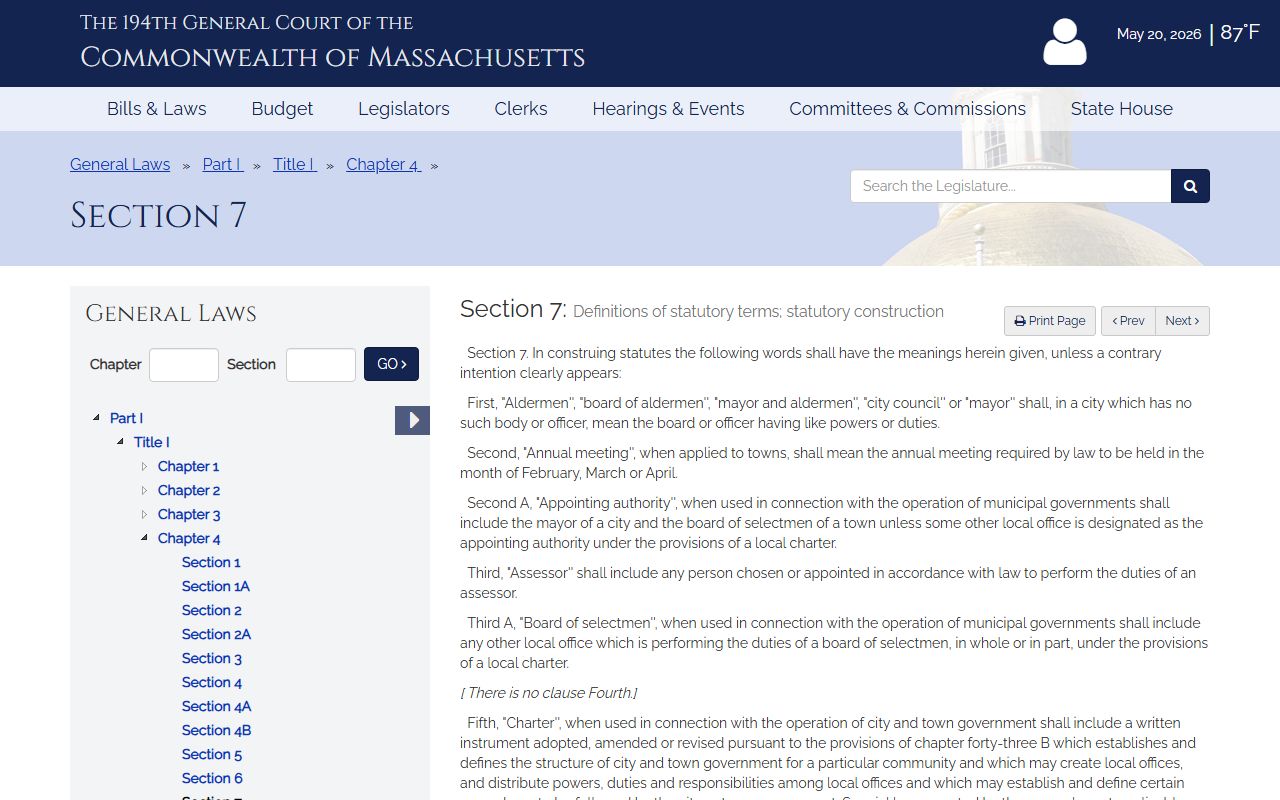
Common exemptions cover personal privacy, ongoing investigations, certain personnel matters, trade secrets, and records protected by other statutes. An agency that withholds records should cite the specific exemption.
Public Records Request Fees
Agencies may charge for staff time and copies under the rules set by the law. The first hours of search and segregation are often free, and copy fees follow a schedule. Confirm any quoted amount before you agree to pay, and ask for an itemized estimate.
| Item | Amount |
|---|---|
| Search and segregation | Set by the agency under state rules |
| Paper copies | Set by the agency under state rules |
| Electronic copies | Often free where the file already exists |
| Fee waiver | Possible for clear public-interest requests |
Tips for a Better Plymouth County Public Records Request
Some requests come back fast and clean. Others stall. The difference often comes down to how the request is written. A few habits help.
- Name the specific office, not just the town.
- Give a tight date range when you can.
- Ask for an itemized fee estimate before you agree to pay.
- Use email when allowed and keep the thread together.
A clear ask is easier for the records access officer to answer, and a clear paper trail makes any later appeal stronger. Skip the legalese in the request itself, since plain language tends to get a faster reply.
Appeals to the Supervisor of Records
If an agency denies a request or misses a deadline, the Public Records Law gives a right to appeal. The Supervisor of Records, in the Secretary of the Commonwealth's office, reviews the issue. The Supervisor can order disclosure or uphold an exemption.
Court review is also available after the administrative process. Keep copies of every email and letter, since the timeline depends on the dates.
Redactions and Privacy
An agency that releases a record may also redact parts of it. Social Security numbers, financial account numbers, medical details, and similar items are usually removed. A proper redaction blacks out only what an exemption covers, not the whole document.
If a redaction looks too broad, ask the records access officer to explain the basis. The agency must point to the specific exemption, not a general reason.
Court Clerk vs Town Clerk Requests
The clerk that handles your request depends on the record. A town clerk handles local vital records, town meeting documents, and many municipal records. A court clerk or register handles court files. The Plymouth County Clerk of Court page explains the court-record path.
Note: A Plymouth County public records request to a town will not produce a court file; route court requests to the clerk or register that holds the case.