
Plymouth County Juvenile Court Overview
The Juvenile Court is one of the seven Trial Court departments. It has statewide jurisdiction over matters involving children, with local sessions in Plymouth County at Plymouth and Brockton. The judges, clerks, and probation staff specialize in youth and family cases.
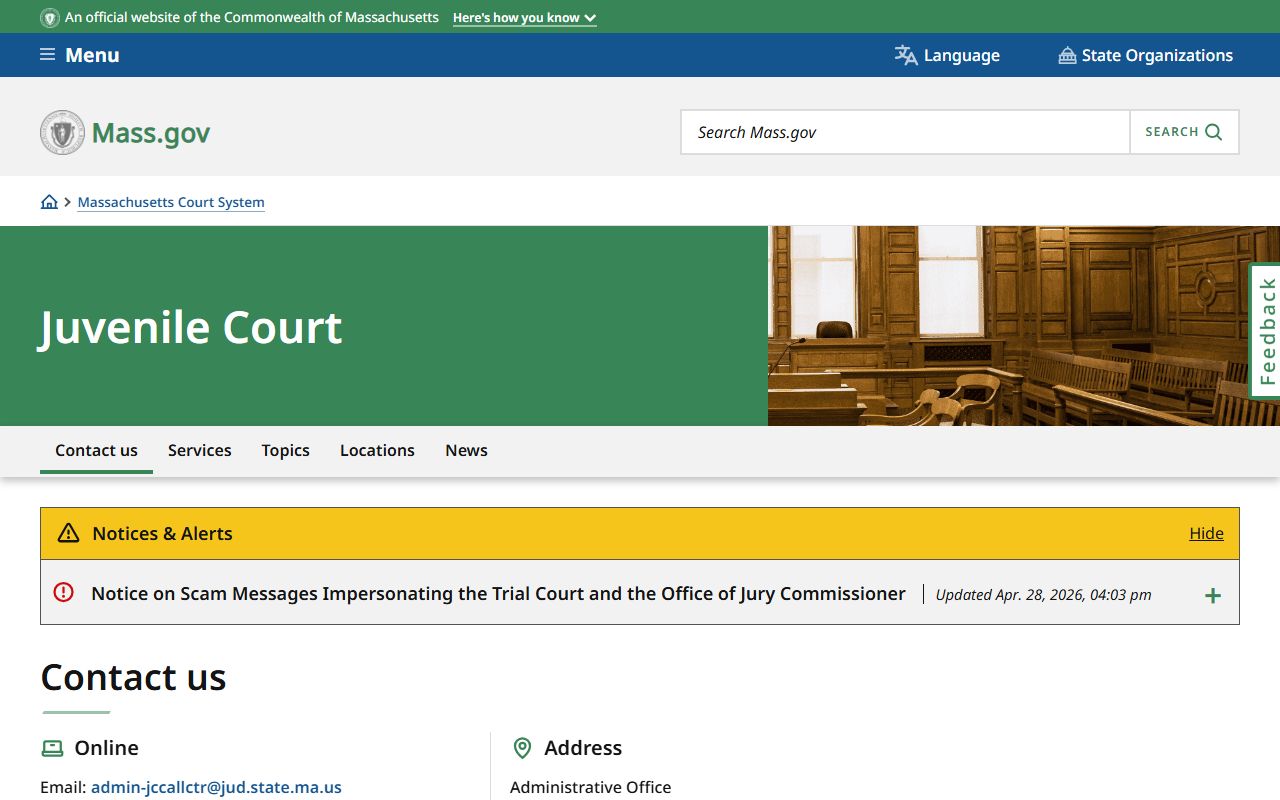
The department page lays out the broad work of the court and its role in the trial court system.
Juvenile Court Locations in Plymouth County
Plymouth County has two Juvenile Court sessions. The case papers and the docket entry name the right session.
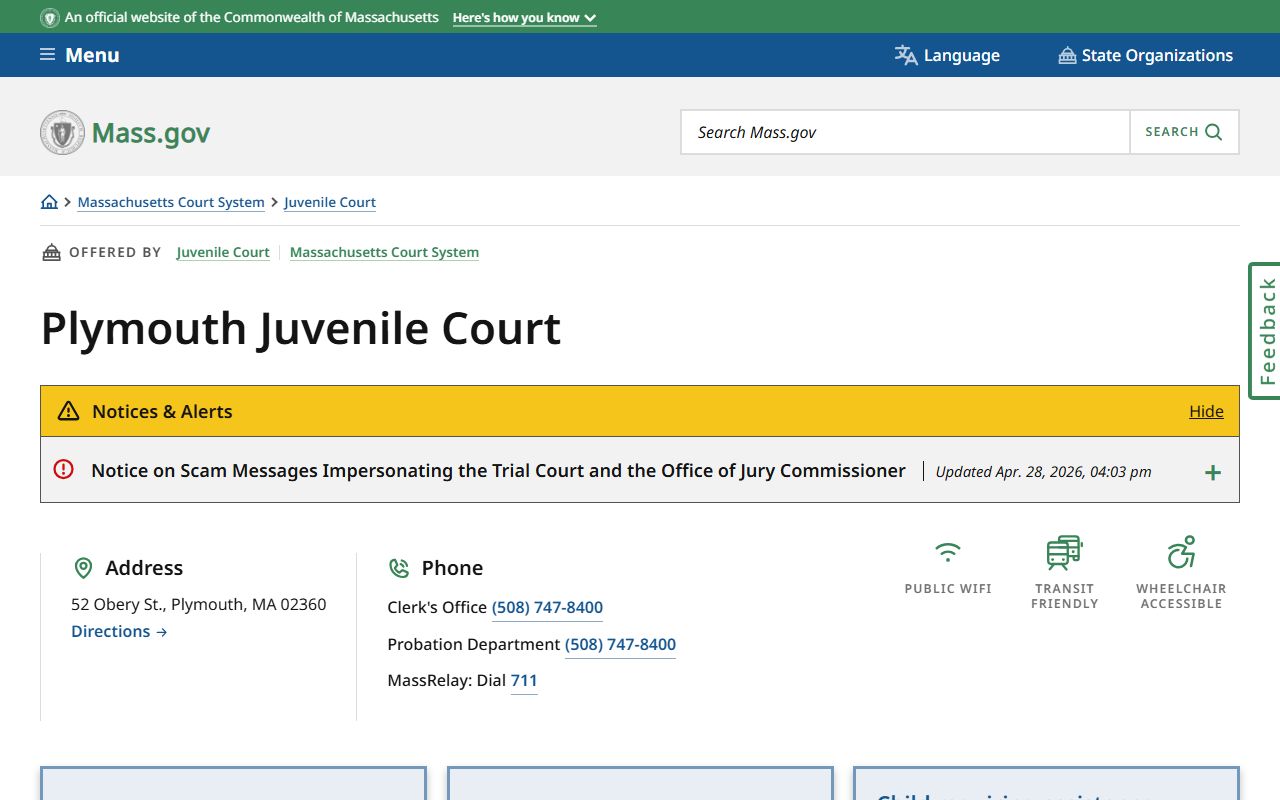
Confirm hours and the entrance on the mass.gov location page before any visit.
What the Juvenile Court Hears
The court hears several distinct case types. Each one has its own rules and its own confidentiality scheme.
- Delinquency - youth criminal charges below the youthful offender threshold.
- Youthful offender - more serious charges that can carry adult-like sentences.
- Care and protection - cases about abuse, neglect, and child welfare.
- Child requiring assistance - school attendance and family-related petitions.
- Adoption-related juvenile matters - sealed under their own rules.
Some of these case types are also heard in part by the Probate and Family Court. The clerk for each court can confirm which department is the right one. The right department depends on the petition, the age of the youth, and the kind of relief sought.
Restricted Access by Massachusetts Law
Juvenile court records are confidential under M.G.L. c.119, §60A. The statute page is shown below.
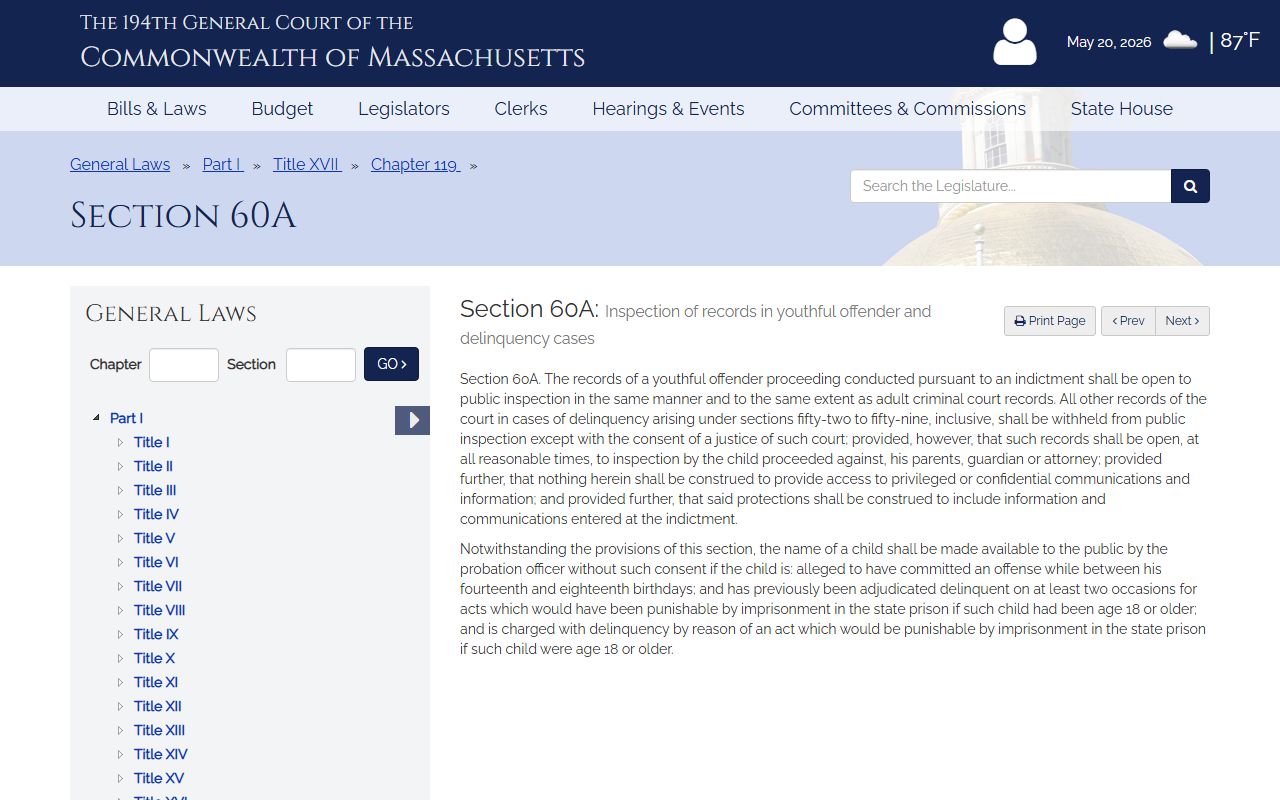
This statute limits public access to juvenile files. A casual search of MassCourts will not return a delinquency or care and protection record the way it returns an open civil case. The court takes confidentiality seriously, both to protect youth and to support rehabilitation.
Delinquency Cases in Plymouth County
A delinquency case is the juvenile track for most youth criminal charges. The court hears the complaint, sets release conditions, and tracks the case through pretrial, plea or trial, and disposition. Probation often plays a central role, both before and after disposition.
The point of the delinquency track is rehabilitation. Dispositions range from continuances and probation to commitment to the Department of Youth Services. Records of these cases stay confidential under the juvenile statute.
Brockton Juvenile Court Session
The Brockton Juvenile Court serves the northern and urban part of Plymouth County. The session handles delinquency, care and protection, and related youth cases for the towns in its catchment.
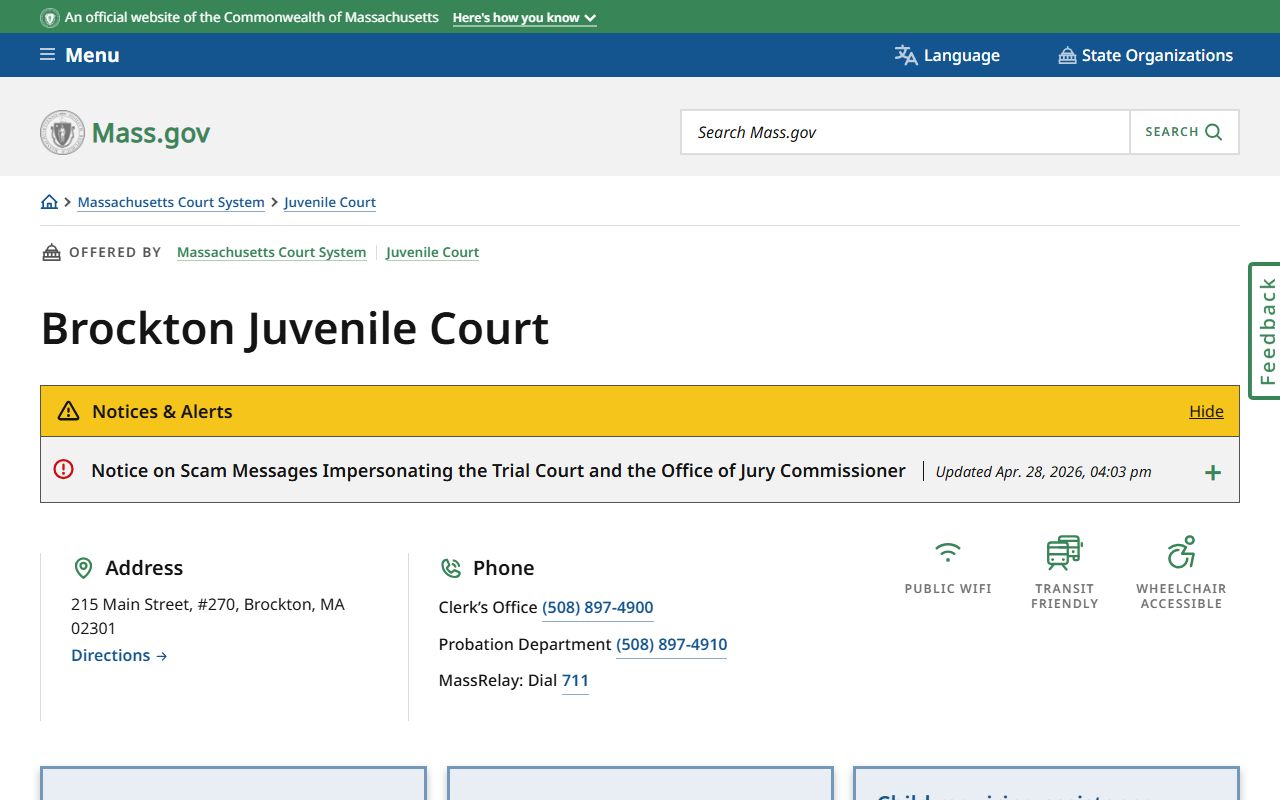
Use the Brockton Juvenile Court page for the address, hours, and accessibility information.
Who Can See a Plymouth County Juvenile Record
Access is limited to specific people and roles. The list below covers the most common allowed viewers, but each case can have its own rules.
- The juvenile and the juvenile's counsel.
- Parents and guardians.
- Prosecutors and probation staff handling the case.
- Authorized agencies for specific purposes.
- Researchers and others only with a court order.
The court does not hand over juvenile material on a general public request. Even a name confirmation can be limited.
Sealing and Expungement for Youth Records
Sealing under M.G.L. c.276, §100A and M.G.L. c.276, §100C applies to youth criminal records under their own rules. Expungement, which is narrower, may also be available for certain juvenile matters under specific statutes. The eligibility rules turn on the offense, the outcome, and a person's record history.
Anyone considering sealing or expungement of a juvenile record should talk with counsel, since the statutes are detailed and the wrong filing can delay a clean record by years. The court reviews each petition on its facts.
Schools, Agencies, and the Juvenile Court
Schools, the Department of Children and Families, the Department of Youth Services, and similar agencies often work with the Juvenile Court. Information sharing follows specific rules, with limits on what each agency may release outside the court process.
A parent who is contacted by an agency about a juvenile matter should keep records of every notice. Counsel can help unpack what the agency role means for any open or expected court case. Asking for the agency's record of contact is a good early step. Knowing who attended each meeting and what each person said often matters later in court.
Care and Protection Cases
Care and protection cases focus on children who may be at risk. The Department of Children and Families often plays a role, and the court can order services, foster care, or other protective steps. The court appoints counsel for parents and for the child in many cases.
These files contain sensitive material, including medical, school, and home information. Public access is sharply limited. For broader public records framework, see public records.
Youthful Offender Track
Youthful offender cases bring more serious charges. They can carry adult-like sentences and may move differently through the system than ordinary delinquency. The court still applies juvenile rules where they fit, but the stakes are higher.
Youthful offender records may be treated differently for access in narrow circumstances. The case clerk can explain what is open and what is closed under current rules.
Counsel for a youthful offender often comes through the Committee for Public Counsel Services, since the matters are serious and the stakes are high. Specialized juvenile defense practice is its own field within criminal law.
Child Requiring Assistance Petitions
A child requiring assistance petition, often called a CRA, can be filed by a parent, school, or other authorized party when a youth needs support beyond the home or school. The court can order services and supervision, but a CRA is not a criminal case.
These files are also restricted under the juvenile confidentiality framework. The court treats them as supportive rather than punitive, with services as the goal.
Records Requests and the Right Office
Requests for juvenile records go to the Juvenile Court clerk for the session that holds the case. The clerk will check whether you are an allowed viewer under the statute and the rules. A request from the general public is usually declined, with a note about the confidentiality rules.
Note: A clerk who declines a juvenile record request is not being difficult; the law requires the office to limit access.